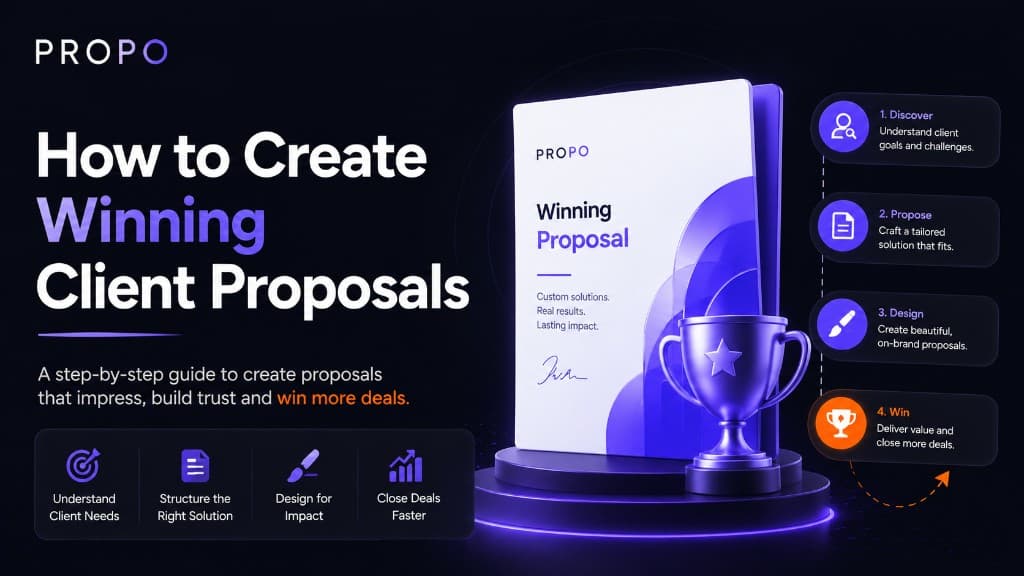
How To Create Winning Client Proposals
A winning proposal isn't the longest one, the most beautifully designed one, or the one with the lowest price. It's the one that makes the client feel understood.
That sounds simple. But most proposals fail at exactly that. They're written from the agency's perspective (here's who we are, here's what we do, here's our process) rather than from the client's perspective: here's what I heard you say, here's why this approach solves your problem, here's what working together will actually look like.
The shift from a self-focused proposal to a client-focused one is the single biggest thing that changes close rates. This guide walks through how to make that shift in practice, from the first conversation to the moment the client signs.
Before You Write Anything: Get the Brief Right
The quality of your proposal is almost entirely determined by the quality of your discovery. If you don't fully understand the client's situation before you start writing, you're essentially guessing, and clients can tell.
Good discovery isn't just gathering requirements. It's understanding:
What the client actually wants versus what they asked for. A client who says "we need a new website" might actually need more leads, a better first impression with enterprise clients, or a way to reduce support queries. The website is the vehicle. Understanding the destination changes what you propose.
What has been tried before.If they've worked with another agency and it went badly, you need to know that. What went wrong? What were they hoping for? A proposal that addresses those specific concerns is far more compelling than one that doesn't acknowledge them.
Who makes the decision.Is the person you're speaking to the decision-maker, or do they need to get sign-off from someone else? If there's a stakeholder you haven't spoken to, your proposal needs to work for someone who wasn't in the room.
What success looks like.Not in vague terms ("we want to grow"), but in measurable ones. More leads, lower bounce rate, a specific launch date, a product that works on mobile. The more concrete you can get, the more concrete your proposal can be, and concrete proposals win.
Take notes during discovery. Use the client's own words where you can. When those words show up in your proposal, it signals that you were genuinely listening.
The Structure of a Proposal That Wins
Structure is the first thing a client notices, even before they read. A well-structured proposal feels considered. A poorly structured one feels rushed.
Here's the order that works consistently:
1. Cover Page
Professional, clean, personalised. The client's company name, the project name, your agency name, and the date. Nothing more.
2. Executive Summary
This is the most important section and the one most agencies write last and most carelessly. It should answer three questions: what is the client trying to achieve, what are you proposing, and why is your approach the right one. Two to four paragraphs, written in plain language. No jargon.
If the client reads nothing else, the executive summary should be enough for them to understand what you're offering and want to know more.
3. Understanding the Problem
Restate the client's situation in your own words. This is where all that discovery pays off. Show the client that you understood not just what they asked for, but why they're asking for it. Reference specifics from your conversation: the challenges they mentioned, the goals they shared.
This section builds trust faster than any credential you could list.
4. Proposed Solution
Now you can talk about your approach. What are you recommending and why? How does your solution address the specific problem you described in the previous section? Keep this focused on outcomes, not process. The client doesn't need to understand your methodology in detail. They need to believe that your approach will work for them.
5. Scope of Work
Be specific. Not "website design" but "design and development of a 7-page responsive website including homepage, services, about, three case study pages, contact, and a blog index." Not "social media management" but "12 posts per month across Instagram and LinkedIn, including copywriting, design, scheduling, and a monthly performance report."
Vague scope creates two problems: it invites negotiation, and it creates disputes later when the client expected something you didn't include. Specificity protects both parties.
6. Timeline and Milestones
Break the work into phases. Give each phase a duration and a clear output. This does two things: it makes the project feel real and manageable, and it gives the client visibility into what they can expect and when.
If there are dependencies on the client's side (approvals, content, access to tools), name them explicitly. "Phase 2 begins upon receipt of final copy from client" protects you if the timeline slips because of delays on their end.
7. Investment
Call it investment, not cost. The framing matters. You're asking the client to invest in an outcome, not pay a fee.
Break pricing into line items. Each line item should map to something in the scope of work, so the client can see exactly what they're paying for. Include payment terms clearly: deposit percentage, milestone billing, due dates.
Avoid a single lump sum with no breakdown. It creates anxiety because the client can't evaluate whether it's reasonable. A detailed breakdown gives them the context to understand the number.
8. Why Us
Keep this short. Two or three paragraphs or a short list of relevant credentials: specific experience, relevant clients, measurable outcomes. This is not the place for a company history. It's the place to answer the question "why should I trust you to do this specific thing."
If you have a relevant case study, link to it or include a brief summary. Proof is more persuasive than claims.
9. Terms and Conditions
Cover the essentials without turning it into a legal document. Revision policy, what's out of scope, assumptions the proposal is based on, and what happens if the scope changes. Clear terms prevent misunderstandings later and signal that you run a professional operation.
10. Next Steps
End with a clear, specific call to action. Not "let me know if you have questions," which puts the burden on the client to initiate the next move. Instead: "To move forward, please sign below and return this proposal by [date]" or "Click the approve button to confirm and we'll send the kickoff invoice within 24 hours."
Make it easy to say yes.
Writing the Proposal: Practical Principles
Structure tells you what to include. These principles tell you how to write it.
Write for the person who didn't attend the meeting. In many agencies and companies, the person who requested a proposal shares it internally before making a decision. That second reader has no context. Your proposal should stand on its own without needing explanation.
Use the client's language.If they called the project a "platform refresh," call it that. If they talked about "improving customer retention," use that phrase. Mirror their vocabulary rather than substituting your own. It signals alignment.
Lead with outcomes, not outputs. "A responsive website that converts visitors into leads" is more compelling than "a responsive website." "A campaign that grows your email list by 30% in 90 days" is more compelling than "a 90-day email marketing campaign." Connect the deliverable to the result wherever you can.
Be direct about price.Don't bury the pricing in a footnote or apologise for it in the surrounding text. State it clearly, explain what it includes, and move on. Clients respect directness. Hedging around price signals insecurity.
Keep sentences short.Long, complex sentences slow reading and increase the chance of misreading. If a sentence has more than two clauses, split it. Plain language is not a sign of a simple mind. It's a sign of clear thinking.
Proofread.Twice. A proposal with a typo in the client's company name, a broken table, or a leftover placeholder is a proposal that signals carelessness. Check every number. Check every name. Read it on screen and then read it again.
Common Mistakes That Cost Agencies the Deal
Starting with the agency bio.Nobody reads five pages about your founding story before they know whether your proposal addresses their problem. Move credentials to the back and earn the client's attention before asking for their trust.
Copy-pasting from previous proposals. Clients can tell. References to the wrong industry, generic scope that doesn't match the conversation, pricing that feels unrelated to their brief: these details reveal when a proposal wasn't written for them. Personalise every proposal, even if the core structure is templated.
Over-designing and under-writing. A beautiful layout with weak content doesn't win deals. Substance matters more than style, even though style matters too. Don't let design work become a substitute for thinking.
Sending without a follow-up plan. A proposal sent without any plan for what comes next is just a document you sent. Know when you'll follow up, what you'll say, and what outcome you're working toward.
Proposing too much.Some agencies include every possible service in the hope that something will land. The result is a proposal that feels unfocused and forces the client to make too many decisions. Propose what's right for this client at this time. You can expand the scope later.
Speed Matters More Than You Think
All of this (good structure, strong writing, personalised content) needs to happen quickly enough to matter.
A proposal sent four days after a discovery call is competing with proposals the client has already received from agencies who moved faster. Speed is a signal. It says you took the project seriously immediately, that you're organised, and that working with you means things will move.
The agencies that consistently win proposals aren't just better writers. They're faster. They have systems. Templates for common project types, a clear structure they don't have to reinvent each time, tools that handle the formatting and boilerplate so they can focus on the parts that actually need to be personalised.
Propo is built around this idea. Describe the project, and the AI generates a structured proposal (executive summary, scope, pricing tables, timeline milestones, terms) in minutes. You review it, adjust what's specific to this client, apply your branding, and send. The output is professional and client-ready. The time investment is a fraction of starting from scratch.
For Indian freelancers and agencies, it handles INR pricing natively, with templates designed around the kinds of projects and client relationships common in the Indian market. Free to start, with paid plans from ₹499/month.
The Proposal Is a Preview of the Work
Clients make an inference from your proposal about what it will be like to work with you. A clear, well-structured, thoughtfully written proposal suggests a clear, well-structured, thoughtfully managed project. A rushed, vague, or generic proposal suggests the opposite.
Every proposal you send is a sample of your work. Not just evidence of your capability, but a demonstration of how you communicate, how you think, and how seriously you take the client's problem.
Treat it that way and your close rate will reflect it.
Read next: Proposal Design Best Practices
Win More Clients with Better Proposals
Create professional proposals for Fiverr, Upwork, and direct clients in minutes using AI-powered generation and premium templates.
Keep reading
Similar guides
More on proposals, pricing, and winning clients, picked for this topic.
How to Write Winning Freelance Proposals in India (2026 Guide)
A practical framework for Indian freelancers and agencies to write clear, credible proposals that win clients on Upwork, Fiverr, and direct leads.

How Agencies Can Close Clients Faster
Speed, clarity, and follow-up discipline beat longer proposals. Practical systems for scope, pricing, and interactive documents that move deals to signed.